
Service
Custom Shopify app development and WordPress plugins from a team that ships and maintains its own apps in production.
What you get
Most stores reach a point where the app store stops fitting. Your wholesale pricing has rules no off-the-shelf app understands, your ERP needs order data in a specific shape, or your team spends an hour every morning copying stock levels from a supplier spreadsheet. That is where custom Shopify app development and custom WordPress plugins earn their keep.
We are not a generalist agency that took a Shopify course. We build, sell and support our own products: Shopify apps such as FeedGuard for supplier stock and price sync and RepHub for B2B sales reps, plus RFQ Pro, a request-a-quote plugin for WooCommerce. Running those means dealing with the unglamorous parts every week: app review requirements, webhook retries, API rate limits, billing, plugin licensing and updates that must not break a live checkout.
Client work gets the same discipline. When we build a private app for your store, it handles throttling, logs what it does, survives a webhook arriving twice, and comes with a plan for who maintains it after launch. When we build a WooCommerce extension, it is tested against High-Performance Order Storage and the block-based checkout, not just the classic one.
Typical projects include B2B pricing and quoting logic, ERP and inventory sync, checkout rules built on Shopify Functions, order routing, and AI-assisted product content. Where a job is really about connecting systems across the business, it often overlaps with our AI business automation work, and we will say so.
You can hire us for a fixed-scope build, to extend an existing app, or as a specialist partner alongside your agency or in-house developers.
Each of these can be a project on its own, or one part of a larger system.
We design and build custom Shopify apps for one store or for the App Store: embedded admin tools, Shopify Functions, checkout and theme extensions, and background jobs on the Admin GraphQL API.
ExploreWe build Shopify automations and integrations with ERPs, 3PLs, supplier feeds, accounting and Slack, using webhooks, the Admin GraphQL API and well-monitored background jobs.
ExploreWe build WooCommerce extensions, B2B quoting and pricing, checkout customizations and ERP integrations that stay compatible with HPOS, block checkout and future updates.
ExploreWe build custom WordPress plugins: custom post types, integrations, REST API endpoints, admin tools and commercial plugins with licensing and automatic updates.
ExploreWhat we build
Embedded admin apps built with Polaris and the Admin GraphQL API, for one store (custom distribution) or for the Shopify App Store. Settings screens, bulk tools, dashboards and background jobs.
Discount, delivery, payment and cart validation rules that run inside Shopify's checkout. Useful for tiered B2B pricing, minimum order quantities, or hiding payment methods for certain customers.
Two-way connections between Shopify or WooCommerce and NetSuite, QuickBooks, Xero, a 3PL, a PIM or a supplier feed, with retries, idempotency and a log you can actually read.
B2B quoting, custom pricing, product configurators, order workflows and admin tools that work with HPOS and the block-based Cart and Checkout.
Plugins for membership logic, custom post types, gated content, booking flows or internal tools, written to WordPress coding standards with proper capabilities and escaping.
Product description drafting, attribute extraction from supplier PDFs, or support reply suggestions built on Claude or OpenAI, with a human approval step before anything goes live.
Proof, not promises
The best evidence that a team can build commerce software is software they run themselves. These are products we designed, built and maintain, and they shape how we approach client projects.
What carries over to your project is not the code itself but the habits: we plan for Shopify's quarterly API versions, we test webhook handling against duplicates and out-of-order delivery, we build billing and licensing correctly the first time, and we write the admin screens a support person will need at 9am on a Monday. You can see the full list on our products page.
Example projects
A wholesaler sells to 400 trade accounts, each on one of six price tiers with quantity breaks. For example, a Shopify Function applies the right price at checkout based on a customer tag or company record, so retail and trade buyers share one storefront without a separate wholesale store.
Orders flow from Shopify into NetSuite or another ERP within minutes, and stock levels flow back from several warehouses. The app queues work, retries failed calls, and flags SKUs that exist in one system but not the other instead of silently skipping them.
Block checkout for orders under a minimum value, hide cash on delivery for certain postcodes, or apply a bundle discount the native tools cannot express. The logic runs inside Shopify, so it stays fast and does not rely on fragile theme scripts.
A manufacturer wants trade buyers to request a quote for custom quantities, have sales adjust prices and lead times, then convert the accepted quote into an order. We extend or customise a quoting flow to match how the sales team already works.
A store adds 300 SKUs a month from supplier PDFs. An app extracts attributes, drafts titles, descriptions and SEO fields with Claude, and puts them in a review queue. A merchandiser approves or edits before anything is published.
Orders are split and sent to the right warehouse, dropshipper or 3PL based on stock, destination and product type, with exceptions posted to Slack. This removes the morning spreadsheet sort that someone on the ops team does by hand.
Public vs. custom apps
Shopify gives you two main routes. Which one fits depends on who will use the app and how much you want to invest in it.
A custom app is installed on one store, or on stores within a single Shopify Plus organization, through custom distribution. It does not go through App Store review and it does not need Shopify's Billing API, because you are paying for the build rather than charging merchants. This is the right choice for most client projects: an ERP connector, internal pricing rules, a warehouse tool or a reporting dashboard that only your team will see.
Custom apps still deserve production standards. They should verify webhook signatures, use the GraphQL Admin API rather than the legacy REST API, handle rate limits, and run on hosting you control. We set them up so your team owns the Partner Dashboard app, the repository and the hosting account.
A public app is listed on the Shopify App Store and can be installed by any merchant. That brings extra work: App Store review, the mandatory privacy webhooks, Billing API integration for subscriptions or usage charges, onboarding flows, support documentation, and performance standards if you want the Built for Shopify badge. It also brings ongoing obligations, since Shopify retires API versions on a regular schedule.
We have taken our own apps through this process, so we can tell you honestly what it involves. If you are a founder or agency planning a public app, we help scope a first version that can pass review, then iterate based on real installs.
A custom WordPress plugin for one site is a different job from a commercial plugin sold to thousands of sites. The second needs licensing, an update server, compatibility testing across themes and hosts, and a support process. Our custom WordPress plugin development page covers both.
Not sure which you need? A short call usually settles it. Many projects that start as "we need an app" turn out to be a well-built automation, which is covered under Shopify automation and integrations.
Working together
A lot of our Shopify and WordPress work happens alongside other teams. A design agency owns the theme and needs someone to build the app or Function behind it. An in-house developer is strong on the storefront but does not want to own an ERP sync. We fit into both setups.
Most builds start with a short discovery phase, often one to two weeks, to map data flows and edge cases. A focused custom app or Shopify Function often takes 2–6 weeks after that; larger integrations with an ERP take longer, mostly because of testing against real data. You can read more about our approach on the process page, and see how this fits ecommerce businesses more broadly on our ecommerce solutions page.
FAQ
Check the App Store first; if an existing app covers 90% of what you need, it is usually cheaper to use it. Custom development makes sense when your rules are specific to your business, when you need to connect systems no app supports, or when you are paying for several apps that each do part of the job.
You do. We build in your repository, and for custom apps we set up the app under your Partner or store account so you are not dependent on us. If we reuse a general-purpose library of our own, we tell you up front and license it to you.
Yes. Some capabilities, such as checkout UI extensions on the information, shipping and payment steps, require Shopify Plus. We will tell you early if a requirement depends on your plan, and suggest an alternative where one exists.
Often, yes. We start with a paid code review to understand how it works, which API versions it uses and what is fragile. Sometimes the right answer is to fix and extend it; occasionally it is cheaper to rebuild the core.
Shopify releases a new API version every quarter and retires old ones roughly a year later. We pin each app to a version, track deprecation notices, and include version upgrades in our maintenance plans so nothing stops working by surprise.
Yes, where they help. Drafting product content, extracting data from supplier documents and suggesting support replies work well with a human review step. We are cautious about AI making pricing, refund or fraud decisions on its own, and we will tell you when simple rules are the better tool.
Monitoring, dependency and API version updates, small fixes, and checks after major Shopify, WordPress or WooCommerce releases. We agree the scope in writing, and you can stop at any time because you hold the code and accounts.
Send us a short description of the problem, the platforms involved and any deadline. We will reply with questions, a suggested approach and a realistic range for time and budget. If one of our existing products already solves it, we will point you there instead.
We pick tools for your situation, not ours. These are the ones we reach for most on this kind of work.
We don't just build for clients. These are our own products, used by real stores. See all products.
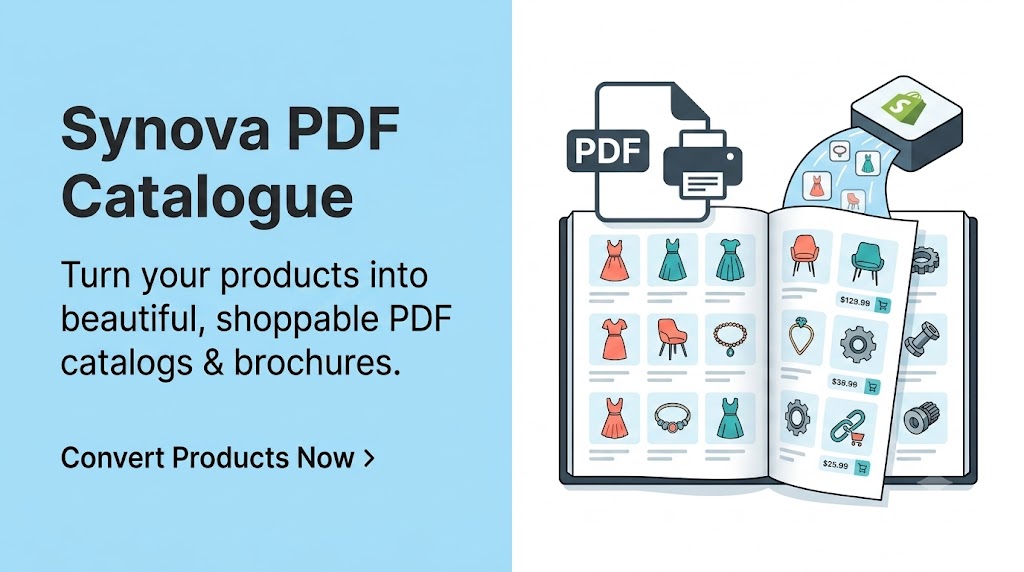
Turn your products into beautiful PDF catalogs, brochures & wholesale line sheets.
Return abuse, explained — not just flagged. Score every return and refund 0–100, see exactly why, and decide with your team in control.
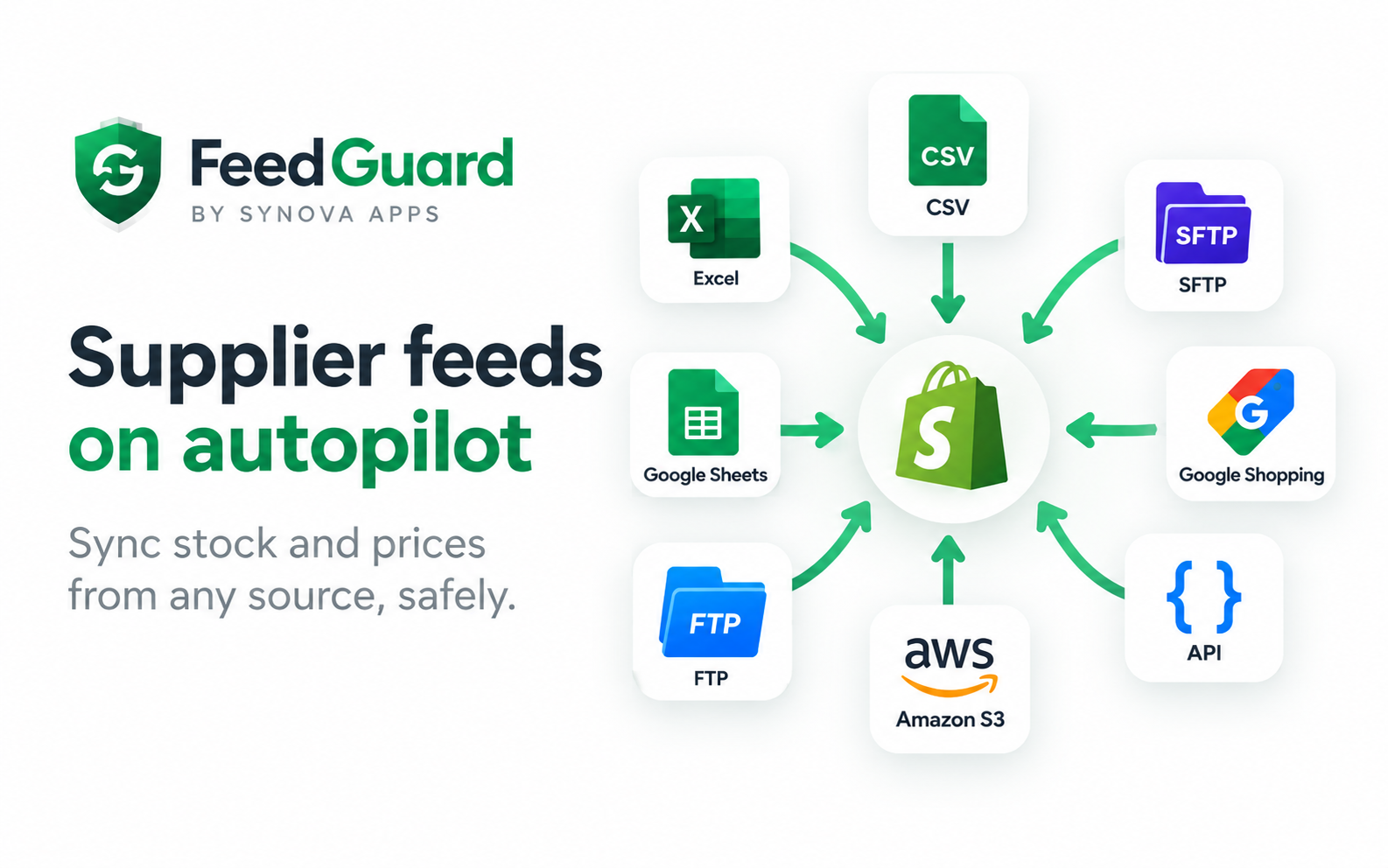
Supplier feeds on autopilot — without the fear. Sync stock and prices from any source, safely.
Turn WooCommerce into a B2B quoting machine — let customers request prices, negotiate, and pay, all in one flow.
Tell us how it works today. We'll tell you honestly what's worth automating, what it would take, and what it would cost.