
Shopify & WordPress Development
Custom Shopify apps, Functions and admin extensions built for your store's rules, by a team that ships its own App Store apps.
What you get
Shopify covers a lot out of the box, and the App Store covers much of the rest. The gaps tend to be the parts that make your business different: how you price for trade customers, how you register warranties, how your reps get credited for orders, how products move from a supplier spreadsheet to your catalog.
As custom Shopify app developers, we build the piece that fills that gap. That could be an embedded admin app your team uses daily, a Shopify Function that enforces a checkout rule, a theme app extension that adds a block to product pages, or a background service that keeps Shopify in step with another system.
We also build and maintain our own Shopify apps, including WarrantyHub and PDF Catalogue. That means we know the current way to build apps, not the way a 2019 tutorial described it, and we know what changes when an app moves from one store to many.
If what you need is mostly moving data between systems rather than a new interface, see Shopify automation and integrations.
The problem
The signs are usually familiar. You run four or five apps that each solve part of a problem and do not talk to each other. Staff keep a spreadsheet next to the Shopify admin because the data they need is spread across screens. A checkout rule you need, such as "trade customers in Canada cannot pay by card on orders over $5,000", cannot be set with any app you have tried.
Workarounds pile up: theme scripts that break when the theme updates, Zapier chains nobody fully understands, manual checks before orders ship. Each one costs a little time every day and adds a little risk.
A custom app replaces the workarounds with one piece of software built around your process. It is not always the answer, and we will say when an existing app or a simple automation is enough. But when your rules are specific and the volume is real, a custom app usually pays for itself in time saved and mistakes avoided.
What we build
Tools that live inside the Shopify admin, built with Polaris so they look and behave like Shopify. Bulk editors, approval queues, dashboards and settings screens.
Custom discounts, delivery and payment customizations, and cart and checkout validation that run on Shopify's infrastructure at checkout.
Extra fields, notices, upsells or B2B details on checkout, the thank-you page and customer account pages, using Shopify's extension points.
App blocks and embeds merchants add through the theme editor, such as a warranty registration form or a quote button, with no manual theme code edits.
Buttons and panels added to order, product and customer pages in the admin, so staff can trigger your custom logic where they already work.
Queued jobs, bulk operations and scheduled tasks for heavy work like catalog imports, report generation or recalculating prices across thousands of variants.
Scenarios
A building supplies store wants trade buyers to apply online, have staff check their business details, then get trade pricing and net terms. An embedded app manages applications and tags approved customers, and a Shopify Function applies the pricing.
A furniture maker sells made-to-order pieces with dimensions, finishes and add-ons. A theme app extension handles the configurator, and a cart validation Function blocks combinations the workshop cannot make.
A brand selling electronics needs to link serial numbers to orders and handle claims. For many stores our WarrantyHub app covers this; a custom app makes sense when claims must sync with a repair partner's system.
Ops staff need a daily view of late orders, backorders by supplier and margin by collection. An embedded app pulls the data with GraphQL and bulk operations and presents it without exporting CSVs.
How we build it
Shopify's platform has changed a lot in the last few years. We build on the current stack and follow the same standards we apply to our own apps.
New apps should use the GraphQL Admin API, and Shopify now requires it for new public apps. We design queries around Shopify's calculated cost limits, use bulk operations for large exports, and back off properly when a store is throttled, so the app keeps working during a busy sale.
Checkout logic that used to live in Shopify Scripts or theme JavaScript now belongs in Functions. They run inside Shopify, are fast, and cannot be bypassed by a customer editing the page. We write them in JavaScript or Rust depending on complexity and performance needs, and we test them against realistic carts.
Interfaces are built with Polaris and App Bridge so they feel native to merchants and staff. Where possible we use app extensions (theme, checkout, admin) rather than editing theme code, which keeps your store upgradeable.
We verify webhook signatures, treat every handler as idempotent because Shopify can deliver the same event more than once, and reconcile with a periodic sync in case an event is missed. Every action is logged so support can answer "what happened to this order?"
If the app is going on the App Store, we handle the extras: OAuth and session tokens, the mandatory privacy webhooks, the Billing API, and the review checklist. Our own RepHub and Return Intelligence apps went through the same process. For the wider picture, see our Shopify and WordPress development overview.
FAQ
A focused app or a single Shopify Function often takes 2–6 weeks after discovery. Apps with several screens, integrations or App Store submission take longer. We give you a range after scoping, and break larger builds into releases so you get something useful early.
It should not. Admin apps and background jobs do not touch storefront speed at all, and Functions run inside Shopify's checkout. Theme app extensions load only on the pages where they are used, and we keep their scripts small.
Not for most custom apps. Some features, such as checkout UI extensions on the information, shipping and payment steps, are Plus-only. We check your plan against your requirements during discovery.
Usually on a cloud host in an account you own, such as Fly.io, Render, Vercel or AWS, with a Postgres database. Hosting costs for a single-store app are typically modest, and we tell you the expected running cost before you commit.
Yes, if it is built with that in mind. The main additions are multi-store data separation, billing, onboarding and App Store review. If a public app is a possibility, mention it at the start and we will design for it.
Tell us what the app needs to do, who will use it and which systems it touches. We will come back with questions and a suggested approach. If our own products already cover it, we will tell you.
We pick tools for your situation, not ours. These are the ones we reach for most on this kind of work.
How we designed a Shopify app that syncs supplier stock and prices from any file or API, shows a diff before writing, and refuses to import files it doesn't trust.
Read the storyHow we turned a Google Form, a serial-number spreadsheet and a claims inbox into one Shopify app that registers units, issues coverage and resolves claims with real Shopify objects.
Read the storyHow we built a deterministic, explainable rules engine that scores Shopify return and refund requests, shows the reasons behind every score, and never declines a customer automatically.
Read the storyWe don't just build for clients. These are our own products, used by real stores. See all products.
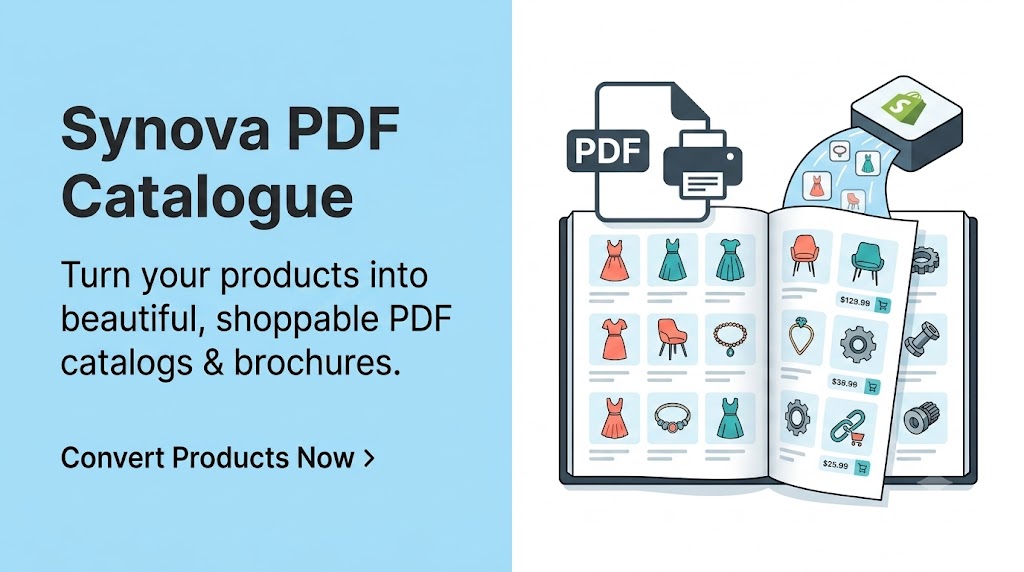
Turn your products into beautiful PDF catalogs, brochures & wholesale line sheets.
Return abuse, explained — not just flagged. Score every return and refund 0–100, see exactly why, and decide with your team in control.
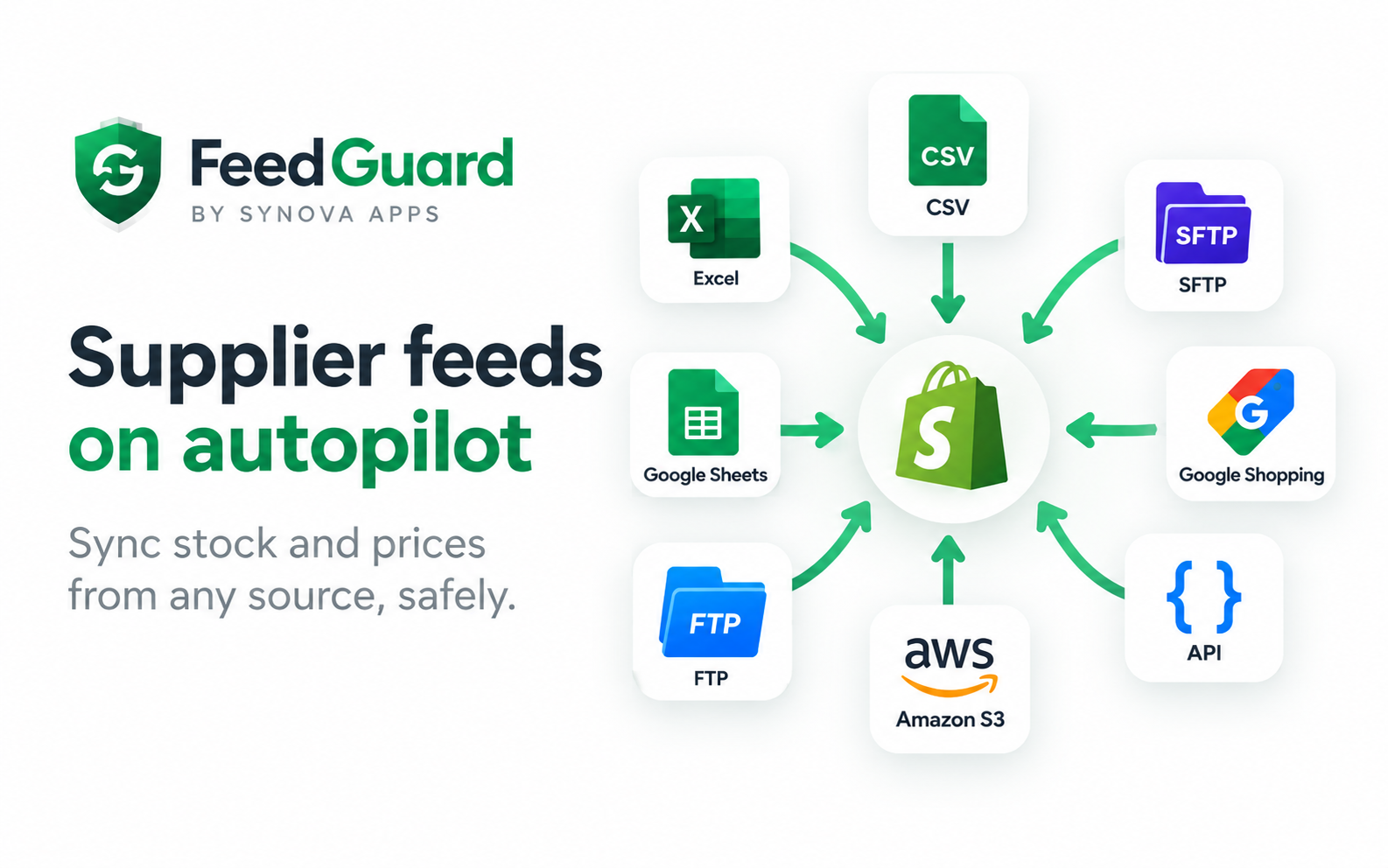
Supplier feeds on autopilot — without the fear. Sync stock and prices from any source, safely.
Turn WooCommerce into a B2B quoting machine — let customers request prices, negotiate, and pay, all in one flow.
Tell us how it works today. We'll tell you honestly what's worth automating, what it would take, and what it would cost.